

Different EMF Measuring Methods: Broadband vs Selective
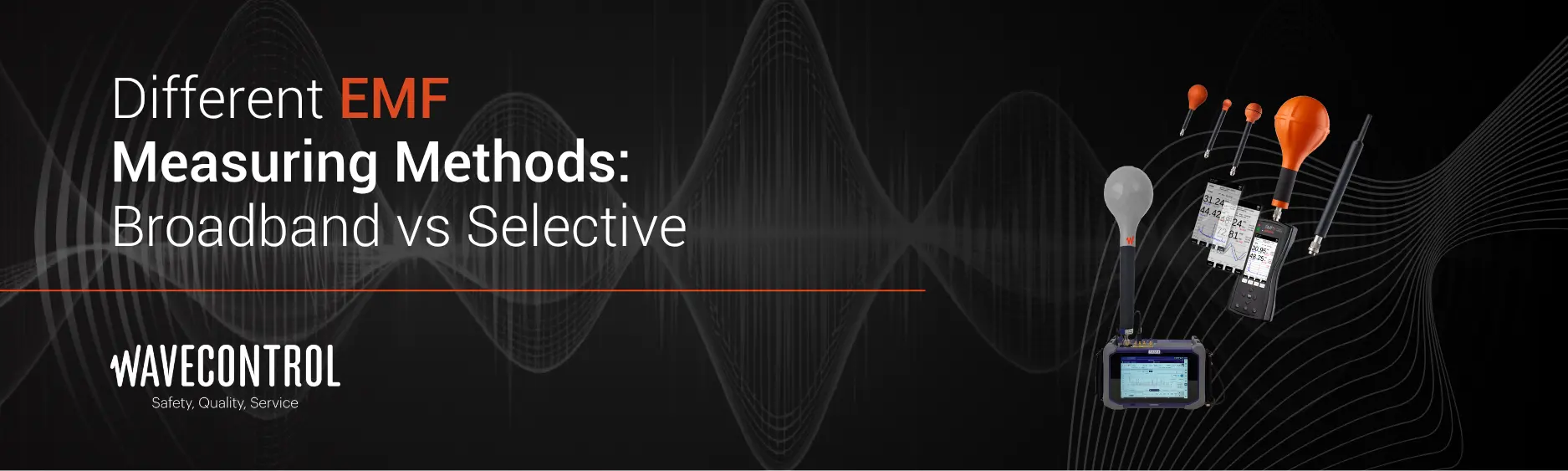
Electromagnetic field exposure assessment is governed by international standards that define both exposure limits and measurement methodologies. In practice, different EMF measuring methods coexist, each addressing specific technical needs. The challenge often lies not in choosing a more complex solution, but in selecting the method appropriate to the assessment objective. This article explains the differences between broadband and selective EMF measuring methods and clarifies when broadband measurements are already sufficient for compliant evaluations.
Broadband EMF measurements as a first compliance step
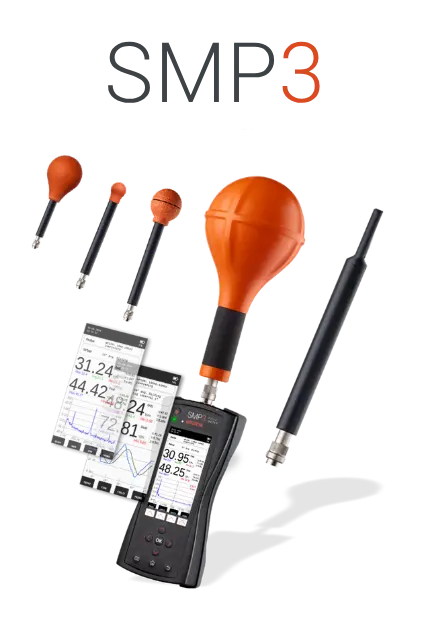
Broadband EMF measuring methods are widely used as the first step in exposure assessments. This approach relies on a portable EMF meter, like Wavecontrol’s SMP3, connected to a broadband probe covering a defined frequency range. The instrument measures the total electromagnetic field generated by all sources within that range and provides a single result that can be directly compared with exposure limits.
International standards commonly recommend broadband measurements as an initial screening technique. When exposure levels are clearly below the applicable limits, no further analysis is required. This makes broadband assessments suitable for routine compliance checks, installation audits and occupational safety evaluations.
Key advantages of broadband EMF measurements include:
- Fast measurement setup and execution
- Simple interpretation of results
- Direct comparison with exposure limits
- Reduced time on site
- Minimal configuration requirements
- Reduced price
When selective EMF measuring methods are required
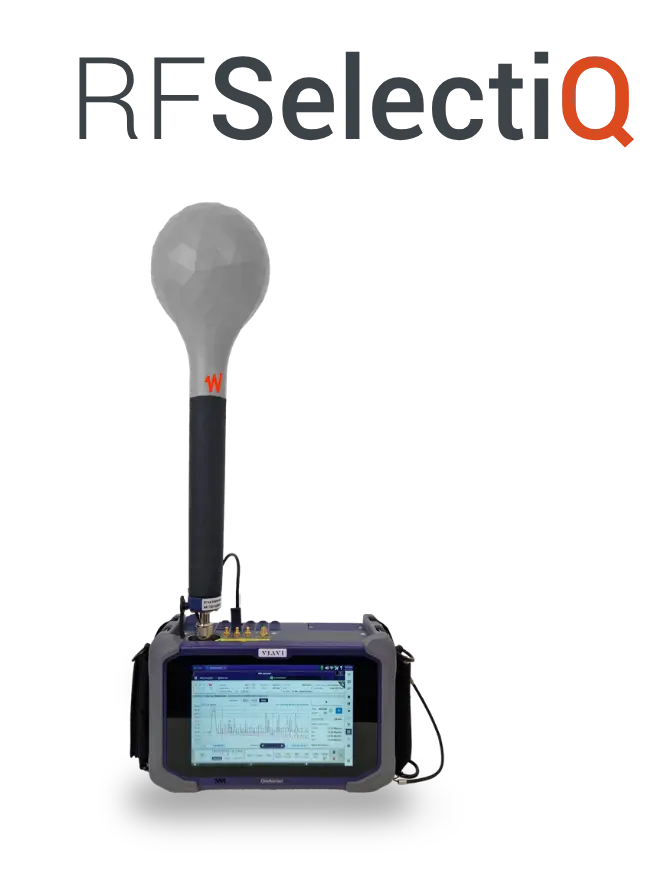
Selective EMF measuring methods provide additional resolution by separating exposure contributions by frequency band, service or operator. This approach is usually based on spectrum analysis and is applied when broadband measurements alone do not provide sufficient information. This type of assessment is supported by frequency-selective instruments such as Wavecontrol’s RFSelectiQ, which enable a more detailed characterization of the RF environment.
Selective methods are typically required in scenarios such as shared sites or environments with multiple technologies operating simultaneously where identification of the contributors is needed, or situations where measured values approach regulatory limits.
Selective measurements are commonly applied when:
- Multiple operators coexist at the same location and identification of the contributors is necesary
- Exposure values are close to regulatory limits
- Authorities request attribution by frequency or operator
- Selective measurements are required by regulators or local normative
Positioning broadband measurements in real assessment workflows
From a practical perspective, broadband EMF measurements form the foundation of most exposure assessment workflows. Their simplicity, speed and direct comparability with exposure limits support efficient decision making.
A stepwise approach is typically followed: broadband measurements are performed first, results are evaluated against limits, and selective methods are only applied if further analysis is required. This workflow aligns with regulatory guidance and avoids unnecessary complexity in standard compliance evaluations.
Broadband instruments such as the SMP3 support a wide range of low and high frequency applications and remain suitable for most real-world EMF assessments.
Conclusion
Broadband and selective EMF measuring methods address different assessment needs. In most situations, broadband measurements already provide the information required to demonstrate compliance and ensure safety. Selective methods add value as a secondary step when deeper analysis is justified, supporting accurate and efficient EMF assessment workflows.
If you would like to explore how these solutions can be tailored to your specific needs, contact one of our experts.

Project supported by ACCIÓ"s International Promotion Programme

Follow