
Electromagnetic Field Measurement in Defense and Radar Applications
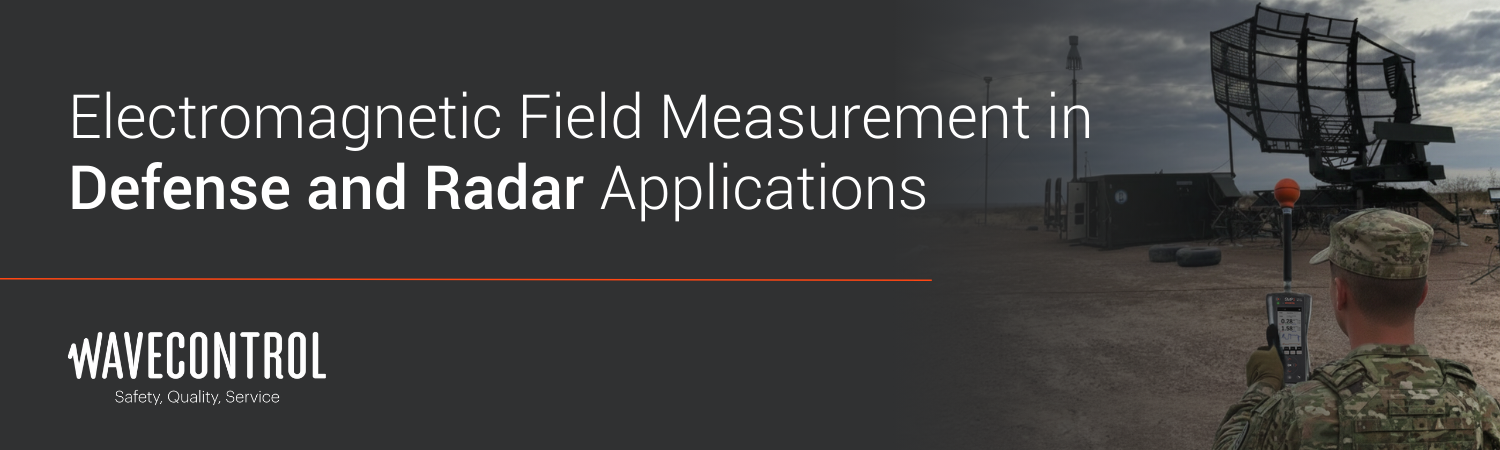
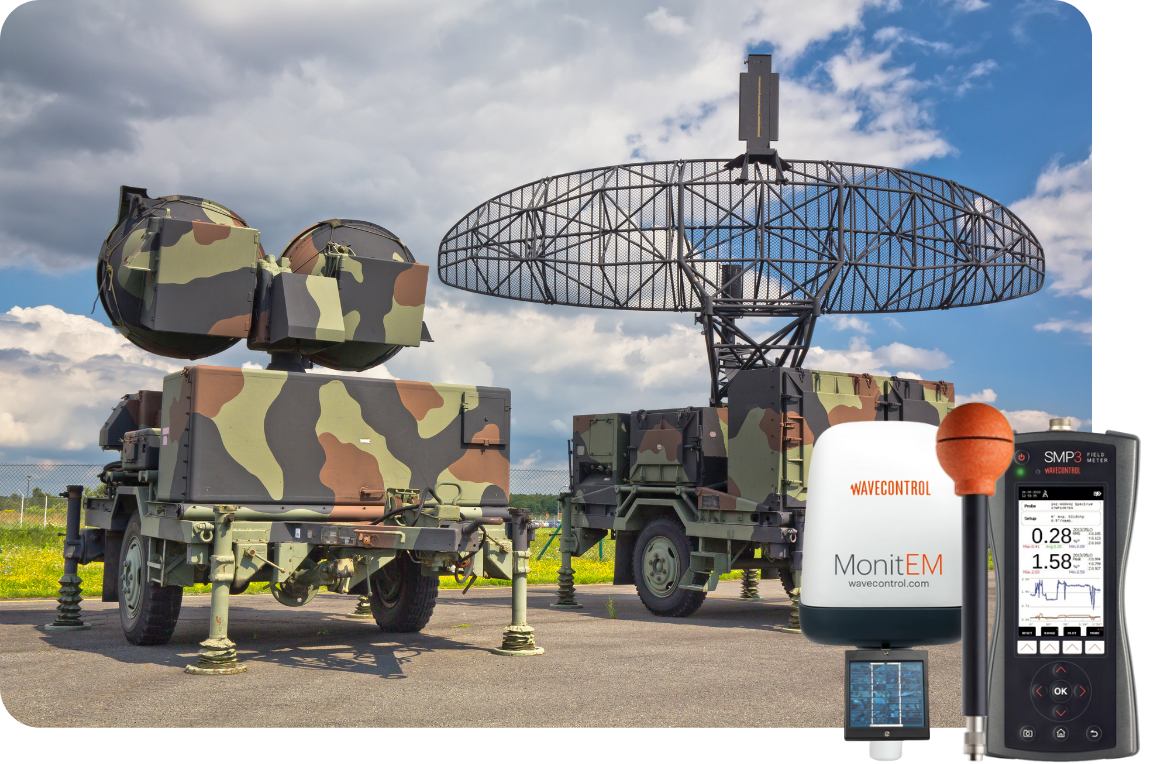
Electromagnetic fields are present in all defense environments, from radar systems to communication networks. These emissions must be accurately assessed to comply with international standards and ensure personnel safety. This article explains how to perform reliable measurements in defense applications, including pulsed signals and scanning radars, using the appropriate electromagnetic field measurement solutions. RF portable solutions, such as the Wavecontrol SMP3 portable meter, are widely used for performing surveys and detailed measurements. Continuous monitoring in critical zones can be achieved with Wavecontrol MonitEM area monitors, which provide real-time data and remote access for compliance verification
Main EMF Sources in Defense
In the Defense sector, there are different sources of EMF, which include:
- Surveillance and tracking radars: Operate from below 1 GHz to over 100 GHz.
- RFID systems: Range from 125 kHz to 2.45 GHz.
- RF jammers: Cover 20 MHz up to 18 GHz.
- Communication antennas: From tens of MHz to several GHz.
Measuring Pulsed Radar Signals
Pulsed signals are predominant in the defense sector. Pulsed signals with high crest factors (that is, the difference between the Peak and RMS), present significant challenges to measure. To achieve more accurate results:
- Some critical parameters must be considered such as: Duty cycle, pulse repetition frequency, and pulse width.
- Appropriate measurement methods must be used. Either broadband or selective measurement instruments can be used with the most suitable probe (based on RF signal characteristics). For broadband measurements, there are two probe types:
– Thermocouple probes: True RMS but slow response (≈2 s) and low sensitivity. Ideal for fixed radars only.
– Diode-based probes: High sensitivity (down to 0.2 V/m) and fast response, ideal for scanning radars.
When measuring a pulsed field with a high crest factor, the behavior of diode-based probes changes depending on the field intensity. In high field conditions (linear region, also called CW range in probe datasheets), there can be a deviation from the true RMS value which can be easily compensated using a correction factor based on the duty cycle (DC) and pulse repetition frequency (PRF). Wavecontrol Application Note provides these correction factors for its WPF18, WPF40, WPF60 and WPF90 probes for different ranges of DC and PRF.
You can download the Application Note here: Download Application Note
Scanning Radar Measurement
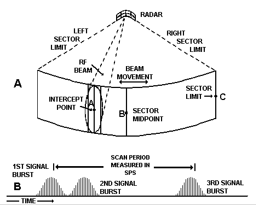
Rotating radars require fast integration to avoid signal loss. Thermocouple probes (≈2 s) and Standard diode-based probes (500 ms) are too slow. The recommended solutions are:
- FAST probes with an integration time that is the same or shorter than the illumination time of the radar. Wavecontrol designed a fast version of the diode-based probes with a 4 ms integration and MaxFast RMS feature to capture the maximum RMS values. This maximum RMS value can be used to calculate the
 Peak value of the radar system.
- Depending on the illumination time of a scanning radar, the integration time of a probe presents an attenuation in the measured field. For example, a scanning radar with an illumination time of 4.17 ms. The attenuation of different probe types are:
– Thermocouple (≈2 s): attenuation of 27 dB (linear factor ≈22)
– Standard diode-based (≈500 ms): 21 dB (linear factor ≈11)
– FAST diode-based probe (4 ms): 1.4 dB (linear factor ≈1.3)
When measuring a scanning radar, it is recommended to perform these measurements using the Wavecontrol WPF FAST probes, which cover frequency ranges up to 90 GHz (models WPF18, WPF40, WPF60, and WPF90). The MaxFast RMS function ensures that the maximum instantaneous RMS value is captured every 0.5 seconds, based on 4 ms integration windows. The result displayed every 0.5 seconds is the maximum of all the 4 ms measurements within this 0.5 second duration.
Personal Safety in Defense Operations
Personnel working near radar or RF sources require individual monitoring. WaveMon personal monitors provide real-time alerts for exposure levels, ensuring compliance with international standards, such as ICNIRP and IEEE standards during field operations.
Conclusion
Accurate electromagnetic field measurement in defense applications requires understanding signal characteristics and using the right equipment. Wavecontrol SMP3 meters, MonitEM area monitors, WaveMon personal monitors, and WPF FAST probes (up to 90 GHz) deliver reliable results for compliance and safety.
To find out more about the Wavecontrol solutions for Defense and Radar and how they can support your EMF assessment needs contact one of our experts.
Article-related FAQ
Why measure pulsed radar signals?
Because their high crest factor can hide peak exposure levels which could exceed the limits.
Which standards apply to EMF in defense?
Some commonly used standards are NATO STANAG 2345, IEEE C95.1-2345, DoDI 6055.11, AFI 48-109, MIL-STD-461, -464, ICNIRP 2020 and EU 2013 guidelines.
What is the difference between thermocouple and diode probes?
Thermocouple probes provide true RMS but are slow and less sensitive; diode probes have much better sensitivity, are faster and more suitable for very short illumination times which are typical in scanning radar applications. The RMS measured with diode-based probes may need to be compensated for very high field intensity signals.
How to measure a scanning radar?
Use Wavecontrol WPF FAST probes with MaxFast RMS to capture instantaneous peak values during rotation.
Can RFID systems be measured with the same probes?
Yes, FAST probes are suitable for short pulses typical of RFID.